Tree bridge
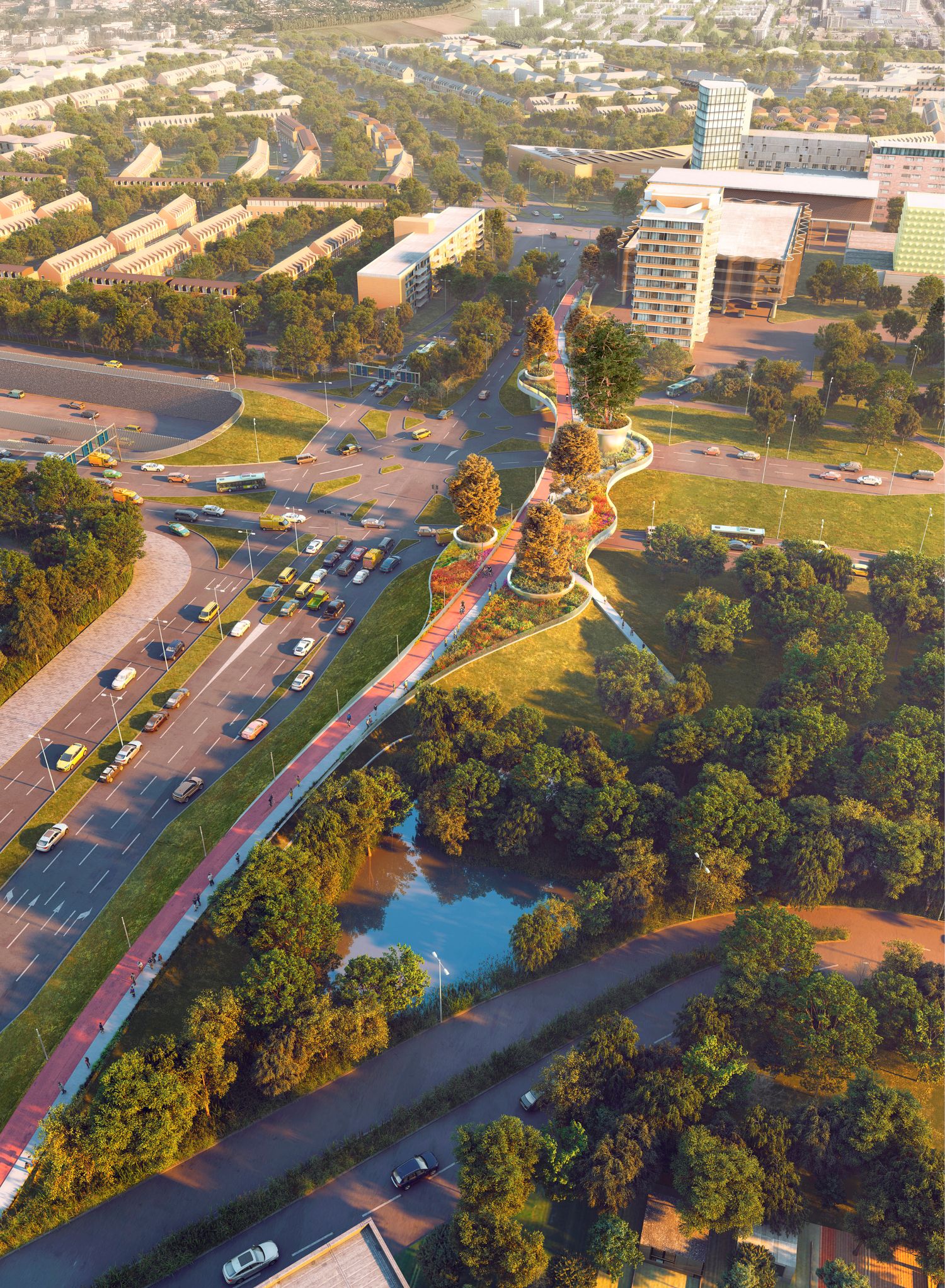
The Tree Bridge transforms a 200-metre crossing over the A9 motorway into a green gateway to the city centre of Amstelveen. Designed in response to the widening and partial lowering of the motorway, the winning competition proposal was selected by the city's residents. The design builds on Amstelveen's internationally recognised green identity, turning a piece of infrastructure into a distinctive landscape element.
Location
Amstelveen (The Netherlands)
Type
Infrastructure
Site
5.000 m²
Program
Bicycle and pedestrian crossing
Client
Gemeente Amstelveen
Design Partners
Juurlink+Geluk (CULD), Paul de Ruiter Architects
Collaborators
Adviesbureau Tielemans
contractor
Consortium FCC Nederland, Macquarie and Siemens
Status
Under construction (2017 – Ongoing)
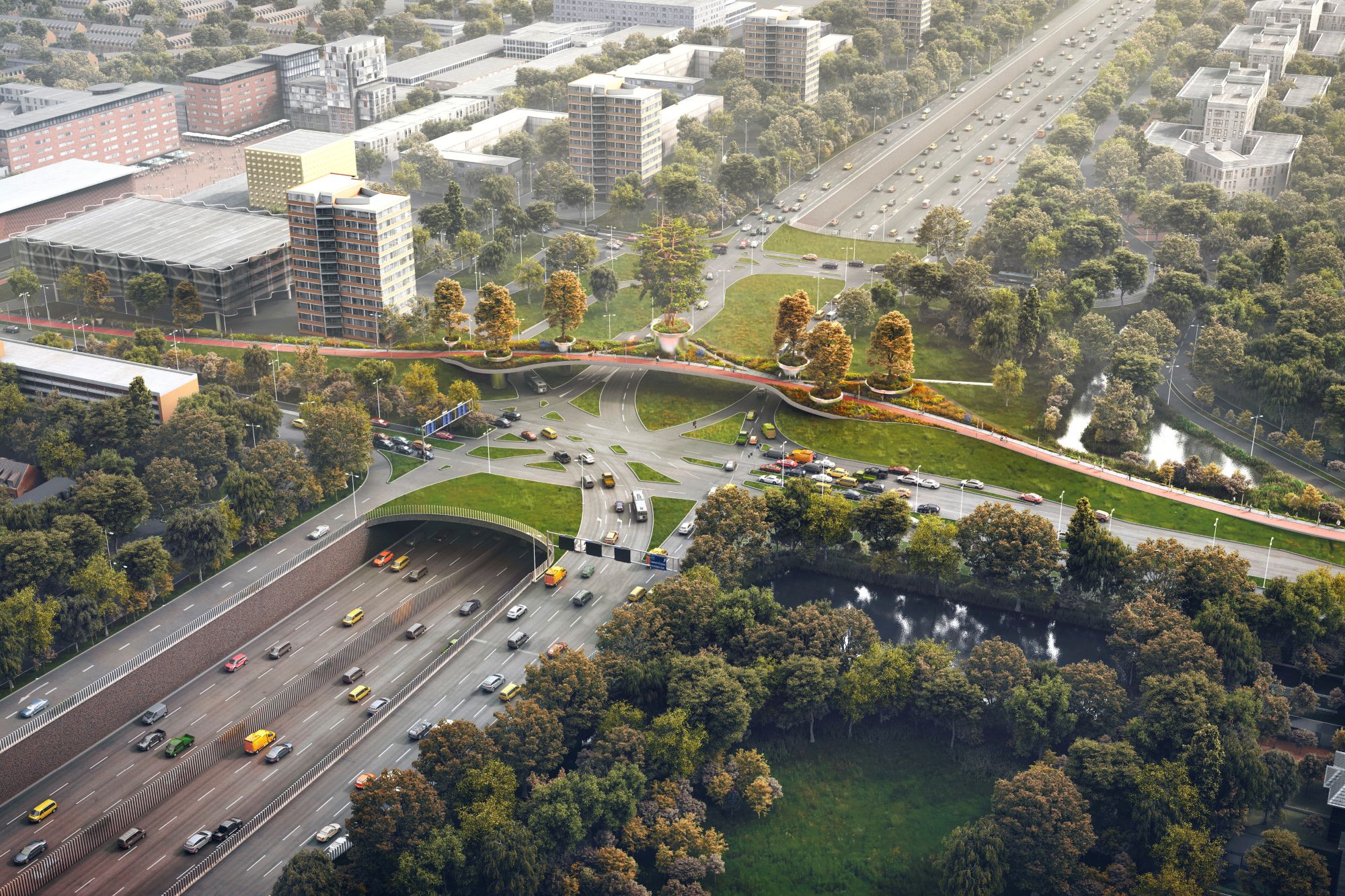
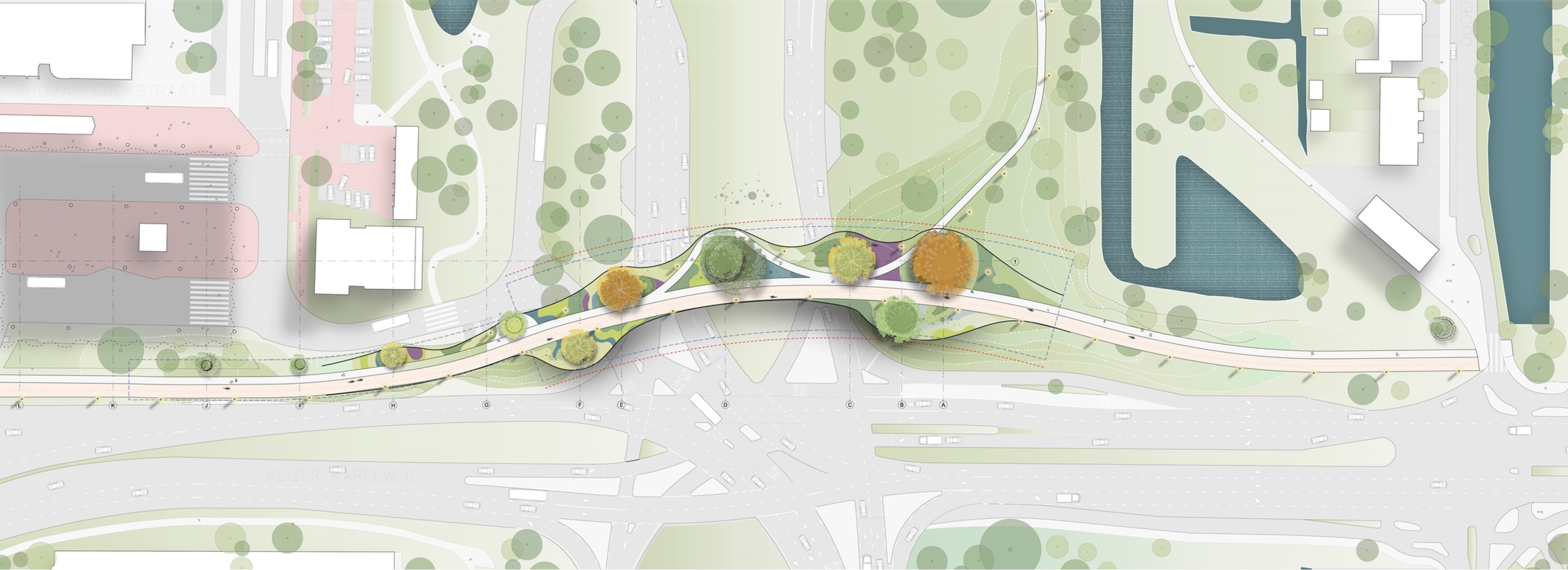
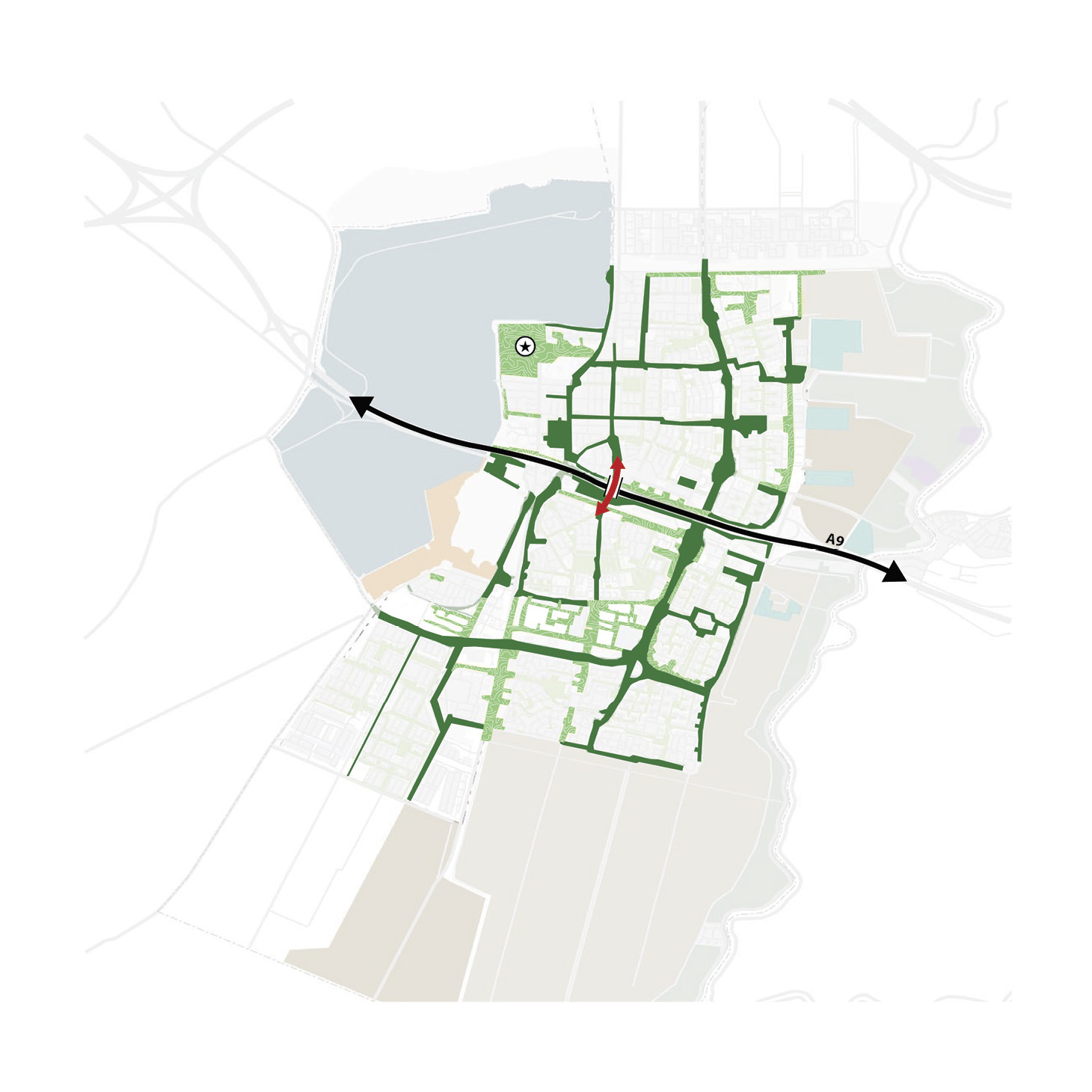
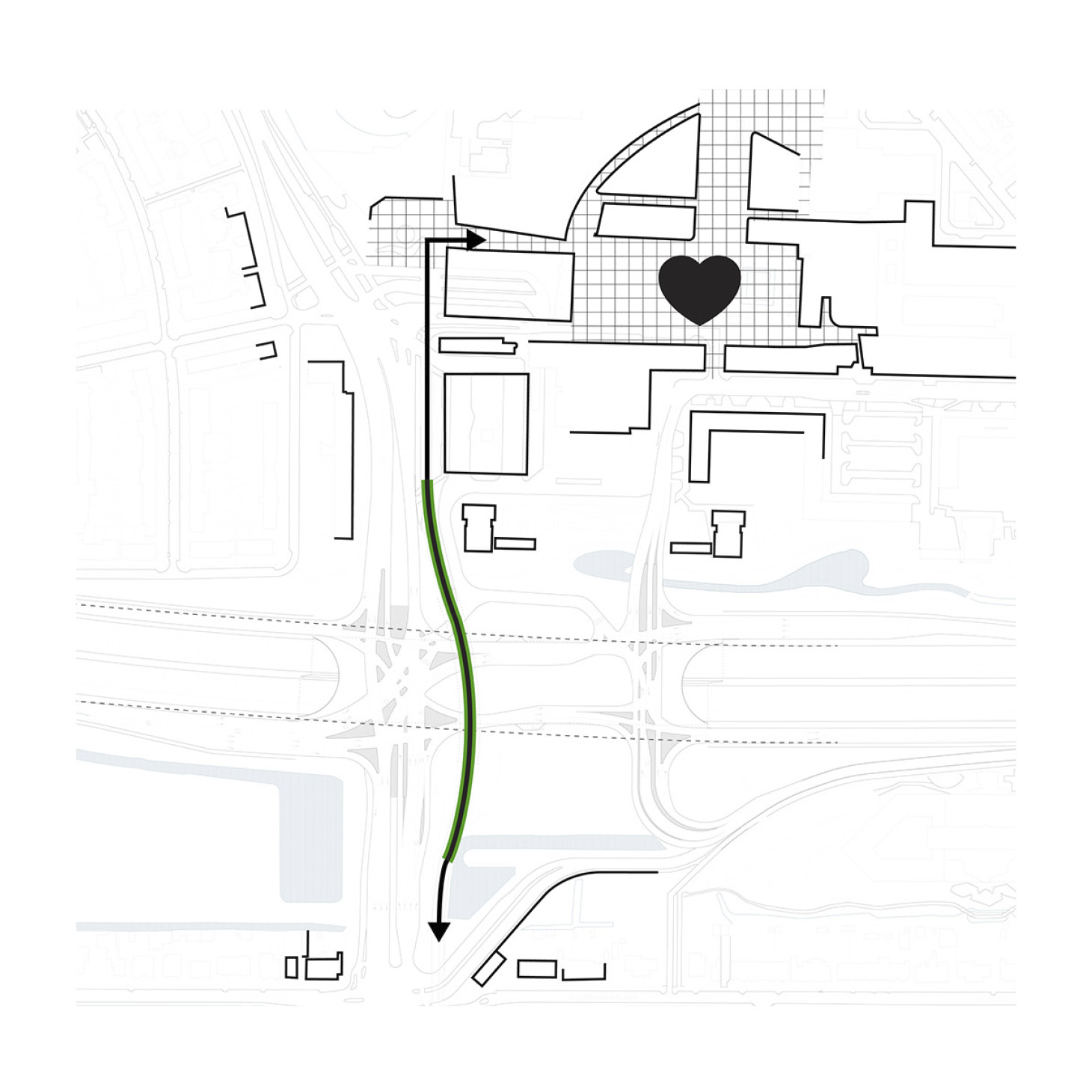
Beyond providing a safe and continuous route for pedestrians and cyclists between the northern and southern parts of the city, the bridge plays an important role in reconnecting the urban fabric. Its main route branches towards the surrounding streets and the city centre, strengthening existing pedestrian and cycling networks. At the same time, the bridge restores a missing link in Amstelveen's green structure, extending the characteristic green landscape across the busy motorway.
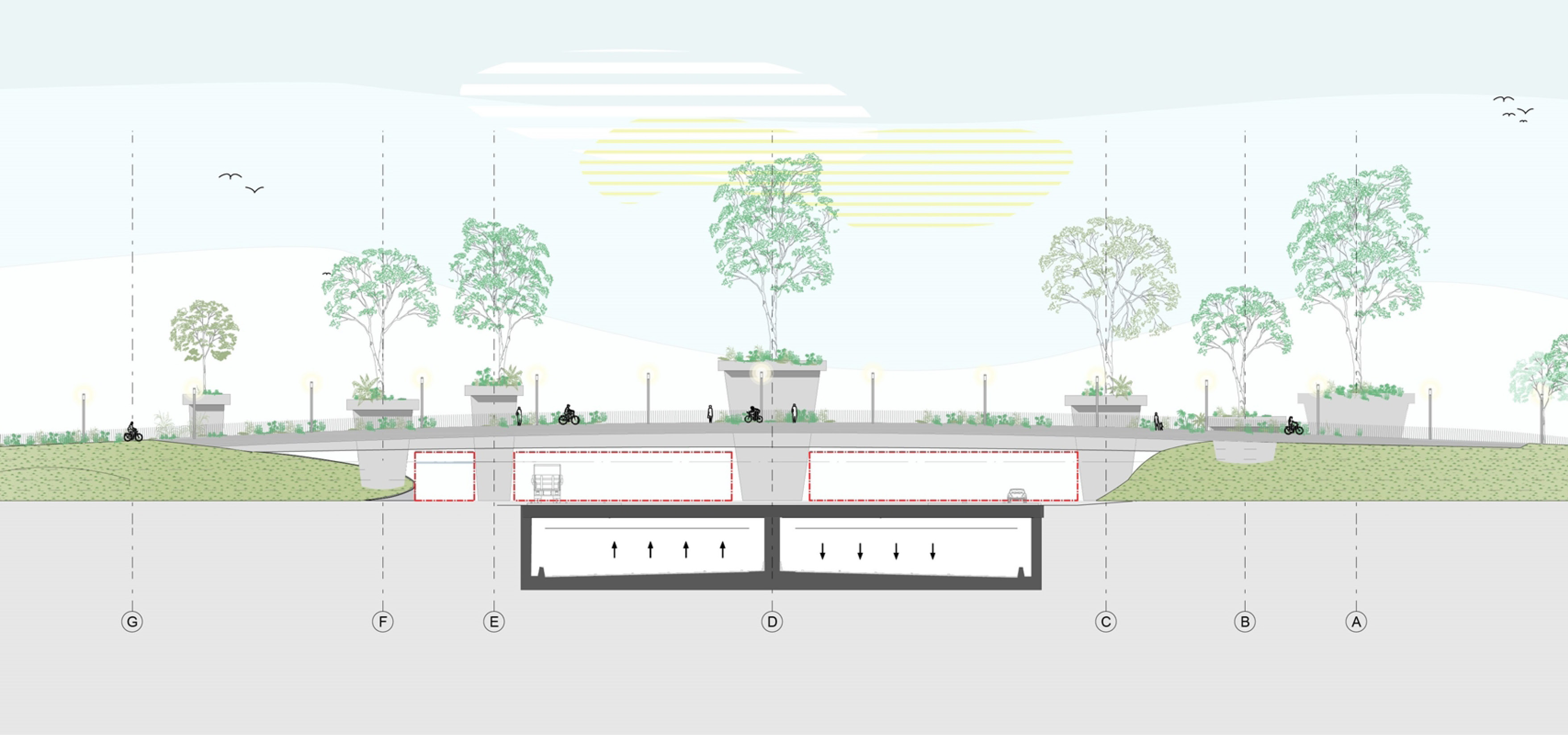
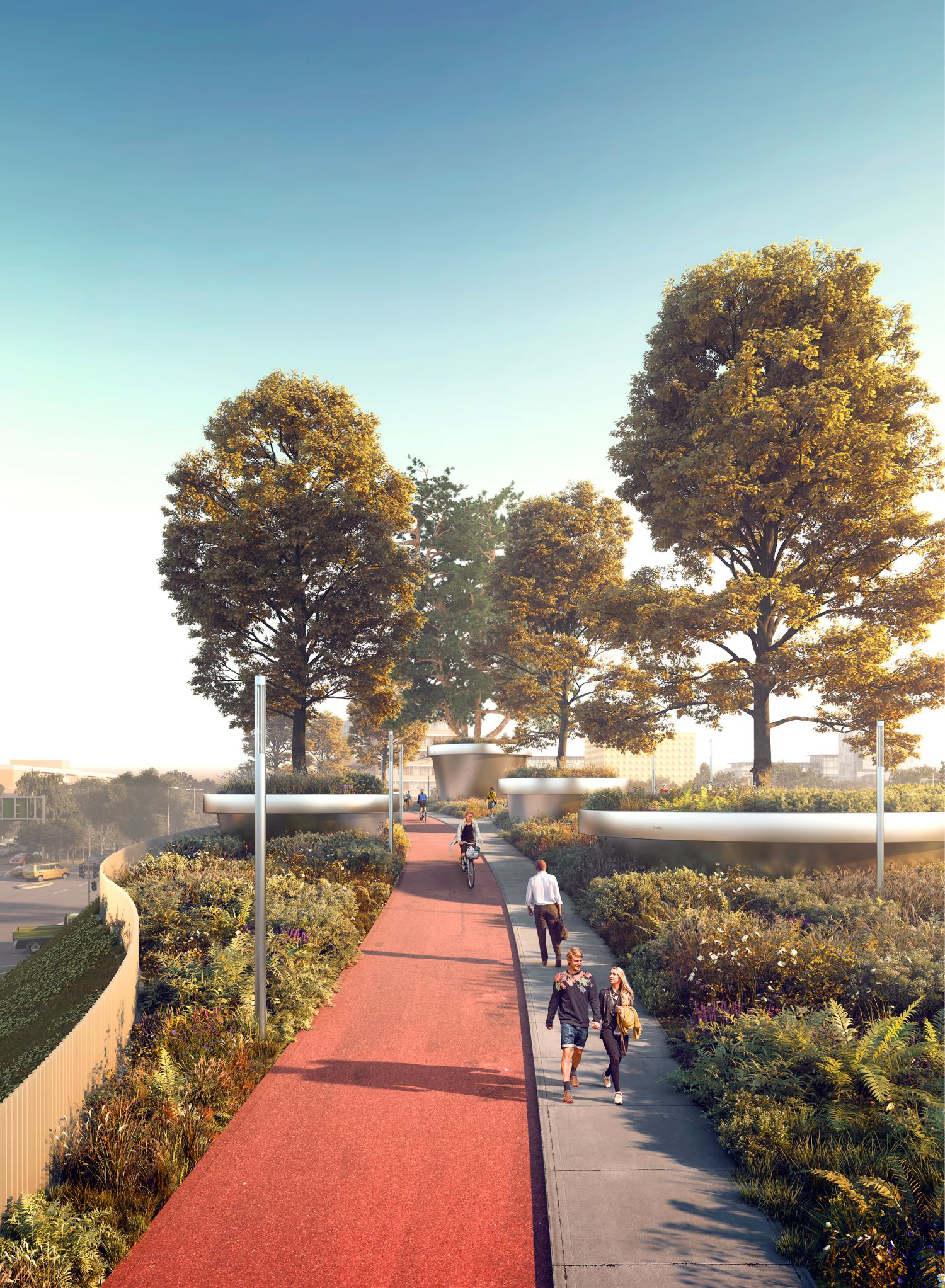
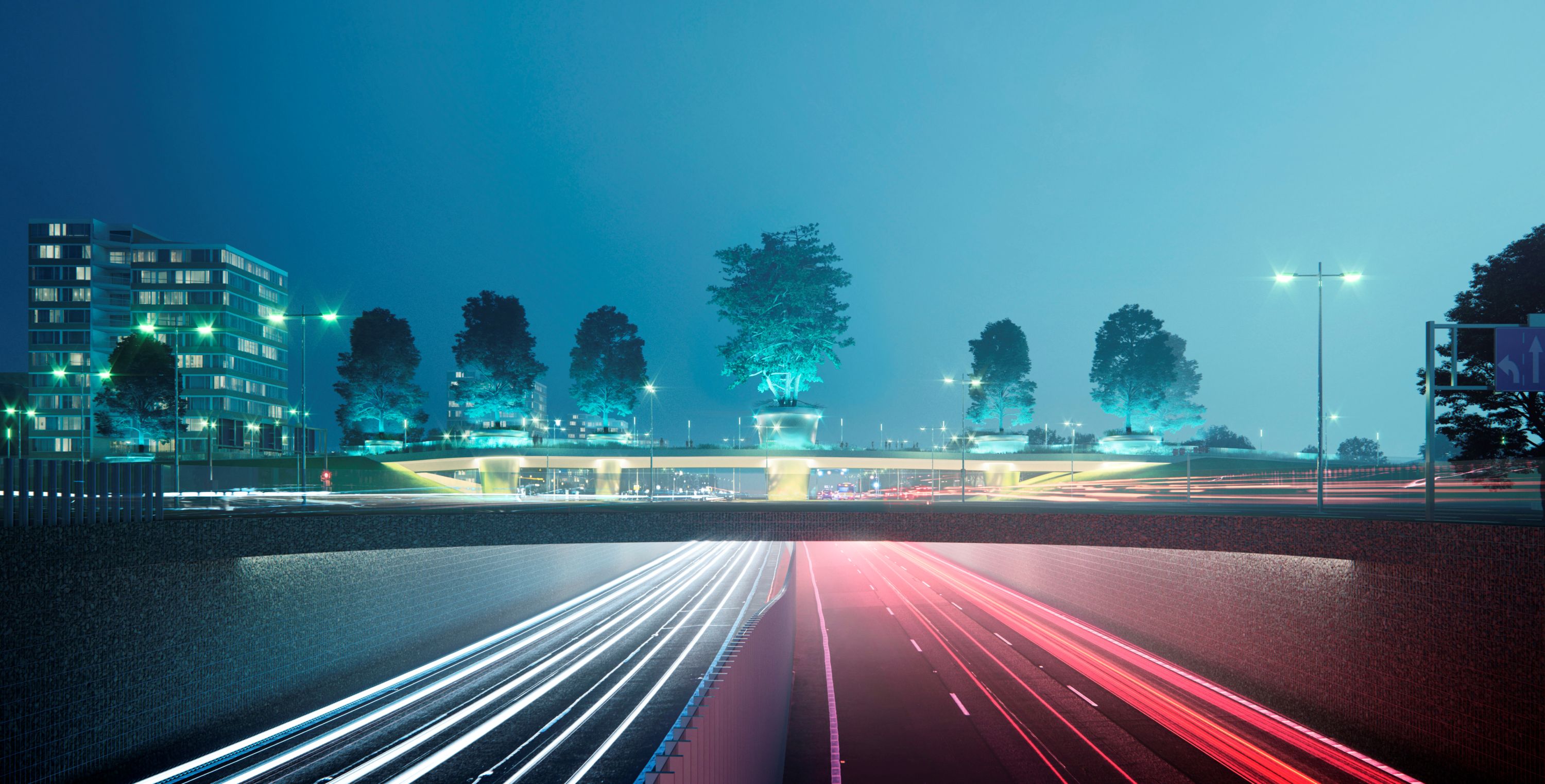
The design is conceived as an elevated park, where a flowing bridge deck meanders around large sculptural planters filled with mature trees. Rather than conventional pillars, the bridge's structural supports are integrated into these oversized planters, allowing the trees to rise like living columns above the motorway. Together, they create a distinctive architectural composition and a recognisable green landmark along the A9.
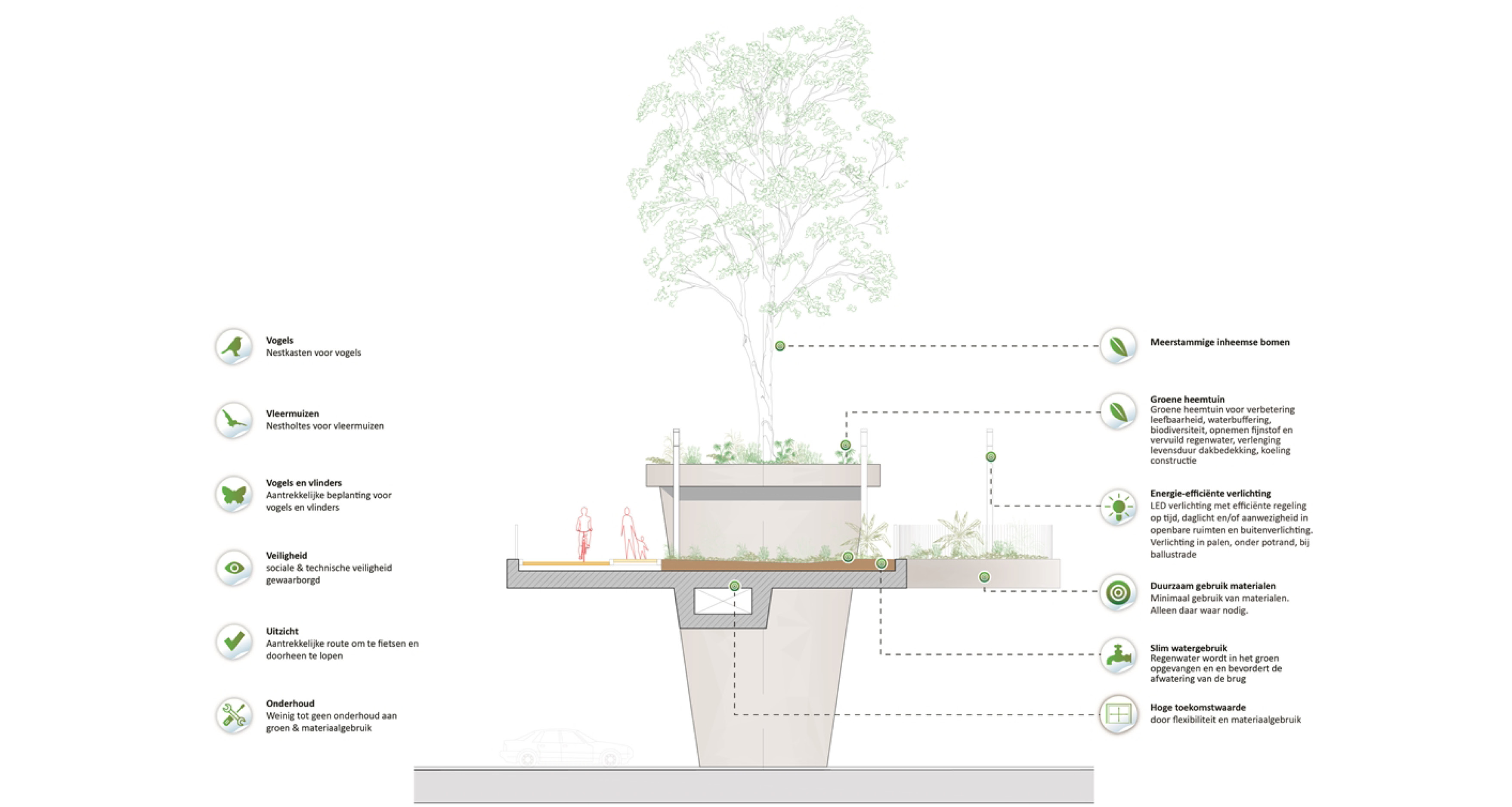
Along the crossing, a rich variety of trees, shrubs and flowering plants creates the atmosphere of a lush, park-like landscape. The carefully composed planting changes in colour and character throughout the seasons, from spring blossoms and summer greenery to vibrant autumn foliage and the silhouettes of trees in winter. The greenery softens the presence of the surrounding infrastructure, turning an otherwise functional crossing into a calm and pleasant experience. After dark, subtle lighting highlights the trees and planting, reinforcing the bridge's identity as a green landmark.